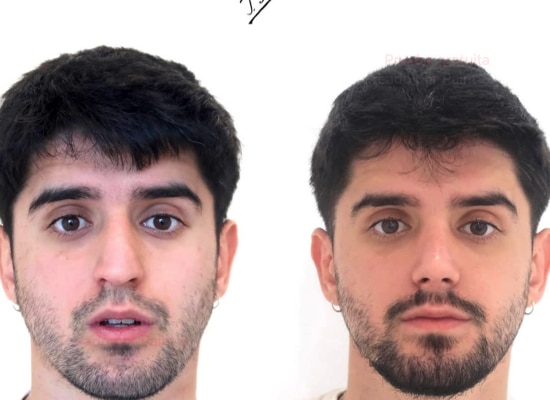
The nose occupies the geometric centre of the face and, for this very reason, its shape, size and proportions have a decisive influence on the harmony of the entire face. It is no coincidence that rhinoplasty—nose reshaping surgery—is one of the most sought-after procedures in plastic surgery worldwide. In Spain, it ranks among the five most sought-after cosmetic procedures, and international statistics confirm that around 64% of those who undergo it are aged between 19 and 34.
For me, as a surgeon, talking about rhinoplasty means talking about much more than just aesthetics: it means talking about quality of life, self-esteem, respiratory function and overall well-being. At Pedralbes Clinic, we see patients every day with a wide variety of reasons for seeking treatment, which is precisely why we wanted to outline in this article the most common reasons that lead someone to consider this procedure, explained with medical rigour and in an accessible way. But first, let me explain what rhinoplasty involves, if you don’t already know what it is:
What is a rhinoplasty?
Rhinoplasty is a surgical procedure that alters the structure of the nose by working on the bone, cartilage, skin, or a combination of all three. Its name derives from the Greek rhinos (nose) and plassein (to shape), and accurately describes its aim: to sculpt a more harmonious, more proportionate and more functional nose.
Contrary to what many people believe, rhinoplasty does not aim for a perfect nose in abstract terms, but rather a nose that blends in a a21> natural way with the rest of the facial features of the patient. A good result is one that no one notices as if it had been altered, but rather that simply makes the face appear more balanced.
Intervention can be approached using two main techniques:
- Closed rhinoplasty: The incisions are made entirely inside the nostrils, so there are no visible external scars. This is the preferred technique when only moderate changes are required.
- Open rhinoplasty: A small incision is made in the columella (the tissue that separates both nostrils), which allows the surgeon a clearer view a16> surgeon a view of the nasal structure. It is particularly useful in cases that are complex or when it is requires great precision at the tip of the nose.
In both cases, the procedure is usually carried out under general anaesthetic, lasts between one and two hours, and the patient can resume their normal social life in about two or three weeks.
See Open or closed rhinoplasty: Which is the best technique for your nose
Rhinoplasty primary vs. rhinoplasty secondary
It is important to distinguish between primary rhinoplasty, which is the first operation on the nose, and secondary or revision rhinoplasty, which is performed when the results of the first operation have not been satisfactory from an aesthetic or functional point of view (which sometimes happens).
Secondary rhinoplasty is technically more complex because the surgeon works on tissues that have already been operated on and healed. It is recommended to wait at least 12 months from the first surgery before considering a20> considering a follow-up, to allow for the swelling to resolve completely and the tissues to stabilise. Choosing an experienced surgeon from the very start is the best a41> way to avoid the need for a second operation.
The most common reasons for having a nose job
1. Reduce a nose that is large or disproportionate
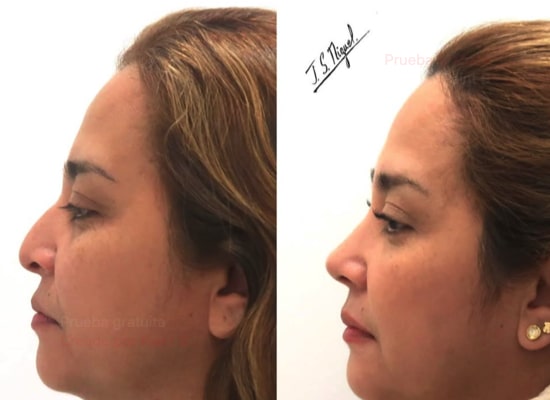
It is probably the most common reason why patients consider having a a9> consider a rhinoplasty. When the size of the nose is excessive in relation to the rest of the face —whether in length, in width or in overall volume— may create a sense of imbalance in the face which is perceived both in photos and in the mirror.
The work of the surgeon in these cases involves removing the excess of bone and cartilage tissue in a controlled and harmonious manner, always respecting the respiratory function and the natural appearance of the result. The reduction may affect the back, the tip, the fins or the entirety of the nose, depending on the analysis of each individual case.
See Rinoplastia de Nariz Ancha: Qué es y Cómo se Realiza
2. Remove the nasal hump
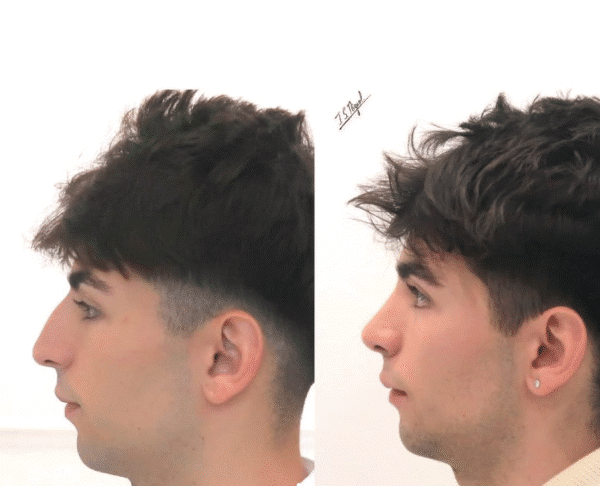
A nasal hump — commonly known as a ‘bump’ or ‘protruding bridge’ — is one of the cosmetic imperfections that causes the most discomfort to those who have it, particularly when viewed from the side. It is a protrusion on the bridge of the nose formed by bone, cartilage, or a combination of both.
Correcting a hump is one of the most common procedures in rhinoplasty, and the results are usually remarkably satisfactory: a smoother, cleaner and more harmonious profile significantly transforms the overall appearance of the face. When the reduced volume on the bridge creates a relative excess at the base, the surgeon may complement the procedure by also working on the tip or the nostrils to maintain the proportions.
See Nose hooked or Roman. How to correct it with a rhinoplasty
3. Correcting a drooping, bulbous or asymmetrical nose tip
The tip of the nose is, technically speaking, the most complex and delicate part of the entire procedure. A drooping tip (pointing downwards), a bulbous tip (excessively rounded and lacking definition), a wide tip or an asymmetrical tip can completely alter the appearance of the face, making it look older, heavier or less harmonious.
At Pedralbes Clinic, we pay particular attention to the tip of the nose, as this is where it is most evident whether a rhinoplasty looks natural or artificial. A well-crafted tip should have the right amount of projection, definition and rotation, blending seamlessly with the rest of the nose and the face without looking surgically altered or artificial.
4. Correcting a deviated septum
A deviation of the nose may be visible from the outside —when the entire nasal pyramid is tilted towards one side— or internally, affecting the nasal septum without it necessarily being visible from the outside. In many cases, both deviations coexist.
The most common causes of a deviated nose are trauma (blows, nasal fractures), although it can also be congenital or develop during growth. In addition to the cosmetic aspect, a deviated nose can cause significant breathing difficulties, which is why, in such cases, cosmetic rhinoplasty is usually combined with functional septoplasty (correction of the nasal septum) in a single procedure.
See Surgery on a deviated septum. Everything you need to know
5. Improving breathing: functional rhinoplasty
This is one of the reasons most overlooked by the general public, yet one of the most significant from a medical perspective. Many people live with chronic nasal congestion for years without realising that there is a surgical solution.
Functional causes that can be treated by rhinoplasty or related procedures include:
- Deviated septum (septoplasty): The nasal septum is the cartilage that divides the two nostrils. When it is deviated, whether due to a congenital condition or previous trauma, it hinders the passage of air through one or both sides of the nose. The most common symptoms are forced mouth breathing, snoring, recurrent sinusitis and a persistent feeling of nasal congestion.
- Enlarged turbinates: The turbinates are bony structures lined with mucous membrane inside the nose that humidify and warm the air. When they are enlarged — whether due to chronic inflammation, allergies or rhinitis — they significantly restrict airflow. See Can’t breathe properly through your nose? Turbinoplasty offers a solution
- Collapse of the nasal valve: The nasal valve is the area with greatest resistance to the passage of air in the nose. When its structure is weak or insufficient, it collapses during inhalation, causing a functional obstruction which can be corrected surgically.
When cosmetic and functional rhinoplasty are combined in a single procedure, we refer to rhinoseptoplasty, a procedure that improves both appearance and respiratory function at the same time, with a single post-operative recovery period.
6. Treat the after-effects of trauma
Nasal fractures are one of the most common facial injuries, both in traffic in road traffic accidents as well as in falls, sports accidents or assaults. When a nasal injury is not treated properly —or when it is treated but leaves lasting effects— it may result in a deviated nose crooked nose, with irregularities on the bridge or with changes in breathing.
Post-traumatic rhinoplasty aims to restore both the shape and function of the nose, restoring the patient’s natural appearance and enabling them to breathe freely. In many such cases, the procedure is reconstructive in nature and may be fully or partially covered by health insurance.
7. Correct congenital malformations
Some people are born with abnormalities in the structure of the nose that can affect their appearance, their breathing, or both. Among the most common are partial nasal agenesis, nasal clefts associated with cleft lip, congenital asymmetries, or a nose that is excessively large or has an atypical shape from birth.
In such cases, rhinoplasty falls within the scope of reconstructive surgery and the approach is always medical, with the aim of restoring normal function and improving the aesthetic integration of the nose within the patient’s facial features.
8. Improve the angle of the nasolabial fold
The nasolabial angle is the angle formed by the nose and the upper lip. In a harmonious face, this angle measures approximately 90–100° in men and 100–110° in women. When it is excessively acute, the nose appears ‘parrot-beaked’ or too droopy; when it is too obtuse, the nose appears excessively upturned.
Correcting the nasolabial angle is a common aspect of rhinoplasty that can have a significant impact on the overall appearance of the face, particularly in profile. In many cases, a small adjustment to this angle can radically transform facial harmony without the need for more drastic changes to other parts of the nose.
9. Reduce or reshape the nasal fins
Wide or prominent nostrils are a common cosmetic concern, especially in patients with certain ethnic features. When the nasal base is excessively wide in relation to the rest of the face, it may create a sense of imbalance which a nose that is smaller or with a hump that is smaller can even accentuate.
Otoplasty —the correction by surgery of the ears— can be performed either as a standalone procedure a9> on its own or as part of a rhinoplasty more extensive. It involves removing small wedges of tissue at the base of the alaria to reduce their width, leaving a few minimal scars that are hidden in the natural fold between the earlobe and the skin of the cheek.
10. Regain self-esteem and emotional well-being
This reason is not strictly medical in nature, but it is one of the most common ones. Many people have spent years feeling self-conscious about the shape of their nose; they avoid having their photo taken in profile, shy away from social situations, or simply live with a quiet sense of unease that accompanies them in their daily lives.
Clinical evidence shows that a well-planned and well-executed rhinoplasty can have a very positive impact on a patient’s self-esteem, self-confidence and emotional well-being. It is not about ‘getting someone else’s nose’, but about having the nose you feel you should have: one that does not attract attention, does not cause insecurity and allows you to live without thinking about it.
Key points to consider before having nose surgery
The importance of a thorough prior consultation
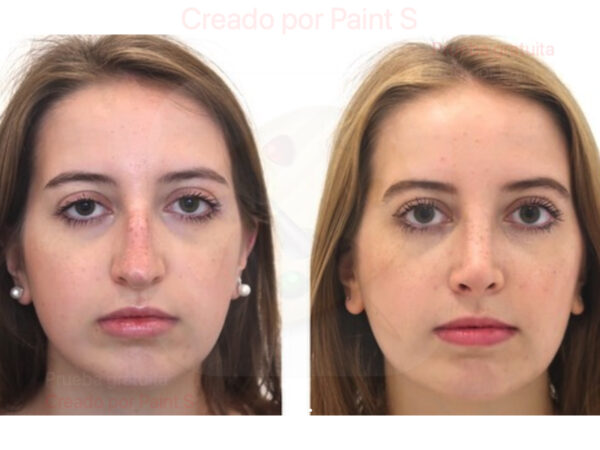
A rhinoplasty should never be planned without a thorough medical consultation. At Pedralbes Clinic we carry out a comprehensive analysis of the facial morphology of the patient, which includes clinical photographs, analysis of proportions, assessment of the structure of the bones and cartilage, and an honest discussion about the patient’s expectations.
This last point is crucial: the surgeon must be able to assess whether the expectations of the patient are realistic and achievable, and communicate clearly what can be achieved and what cannot. Open and transparent communication between doctor and patient is the best guarantee for a satisfactory outcome.
The minimum recommended age
It is generally recommended to wait until facial development is complete before undergoing rhinoplasty: around the age of 15–16 for women and slightly later for men (17–18 years). Having surgery before the nasal structure is fully formed can compromise the long-term result and increase the likelihood of needing a revision operation later on.
The recovery
Recovery following rhinoplasty follows a fairly predictable pattern. During the first week, an external splint is worn and there may be swelling and periorbital bruising (bruises around the eyes), particularly if osteotomies (controlled fractures of the nasal bone) have been performed.
Between the second and third weeks, most patients resume their normal social lives. From the third week onwards, the first changes begin to be noticeable. The final result will be visible from the sixth month onwards, although the definitive result of the rhinoplasty (particularly at the tip of the nose, which is the area where swelling takes the longest to subside) is not fully apparent until after a year has passed.
See How long will it take to recover from a rhinoplasty
Why should you choose Pedralbes Clinic for your rhinoplasty?
At Pedralbes Clinic, we have state-of-the-art surgical facilities and a team of plastic surgeons specialising in rhinoplasty (Dr San Miguel, Dr Nil Prats, Dr David Mis) who combine years of clinical experience with an approach focused on achieving natural-looking results. Each rhinoplasty is planned on a completely personalised basis, adapting the technique (closed or open, traditional or ultrasonic, conservative or structural) to the anatomical characteristics, aesthetic goals and functional needs of each patient.
Our protocol includes an in-depth planning consultation, with photographic analysis and simulation of results where appropriate, so that the patient can make an informed and confident decision. And our post-operative follow-up ensures that every stage of a31> the recovery is closely monitored with rigour and care.
If you are thinking about having nose surgery, whether for aesthetic reasons, functional reasons or for both, we invite you to book your first consultation with no obligation at our cosmetic clinic in Barcelona. Call us on 622 665 559 and take the first step to find out whether rhinoplasty is the right solution for your nose.
You can also read:
Rhinoplasty for Men: How to improve your nose without losing your masculinity
Rhinoplasty ultrasonic vs traditional. Key differences. Which is better
Secondary rhinoplasty: everything you need to know about this second chance
Pros and cons of rhinoplasty and nose reshaping
Rhinoplasty and ageing: What happens to a nose that has undergone surgery as time goes by
Riesgos de la rinoplastia: qué puede salir mal y por qué importa elegir bien al cirujano
Article reviewed and updated on 23 February 2026. The information provided is intended for informative and educational purposes. Each case is unique and requires assessment tailored to the individual by a surgeon who is qualified.

Ha intervenido con éxito a cientos de pacientes que han confiado en sus manos y conocimientos para solucionar todo tipo de problemas estéticos en su rostro.
El dr. San Miguel es uno de los mejores cirujanos de rinoplastia y blefaroplastia en Barcelona y sus pacientes destacan la naturalidad de los resultados que consigue.