The nose is the only feature of the face that never stops changing throughout one’s entire life. This is well known to those surgeons specialising in rhinoplasty, and everyone should be aware of this if they are considering having surgery. However, few questions cause as much confusion as these: What happens to a nose that has undergone surgery when the patient gets older? Do the results last ten, twenty, thirty years? Does time erase what the scalpel did?
In this article, I answer thoroughly and directly all the frequently asked questions we receive at a9> at Pedralbes Clinic: from what happens at the 10-year mark after a rhinoplasty up to whether people regret regret having had surgery on their nose. Because making a well-informed decision is, always, the best starting point for any cosmetic procedure.
Does rhinoplasty last a lifetime?
The answer is yes: rhinoplasty is a permanent surgical procedure. Unlike treatments such as nose reshaping with fillers, the effects of which wear off within twelve to eighteen months because the body reabsorbs the filler, nose surgery alters internal structures: bones, cartilage and soft tissue. These changes are irreversible.
Having said that, “permanent” does not mean “unchangeable”. The nose that has been operated on will continue to be part of a living face that ages, and that implies certain nuances that are worth taking the time to understand before you have surgery.
Does ageing affect the results of a nose job?
Yes, but in a very different from what the majority of patients fear. To understand this, we must distinguish between two structural elements of the nose:
- The nasal bones stop growing once skeletal development is complete in adulthood. Once fully formed, they do not undergo any significant changes over time.
- The nasal cartilages are a different matter altogether. Composed of living cartilage tissue, they continue to grow throughout a person’s lifetime. Scientific measurements estimate an average nasal growth of approximately 0.22 mm per year, a figure imperceptible in day-to-day life but which, when accumulated over decades, explains why older people have larger noses and drooping tips.
Herein lies one of the most counterintuitive facts about rhinoplasty: a nose that has undergone surgery ages better than one that has not. The reason is, essentially, technical. During the operation, the cartilage is reshaped and reinforced, giving the nasal structure greater strength and support.
As the nose is more structurally defined, the loss of support that comes with ageing has a less noticeable impact: the tip droops less, the hump on the bridge is less pronounced, and the projection of the nose is preserved for longer. Far from accelerating facial ageing, a well-executed rhinoplasty can produce a long-term rejuvenating effect.
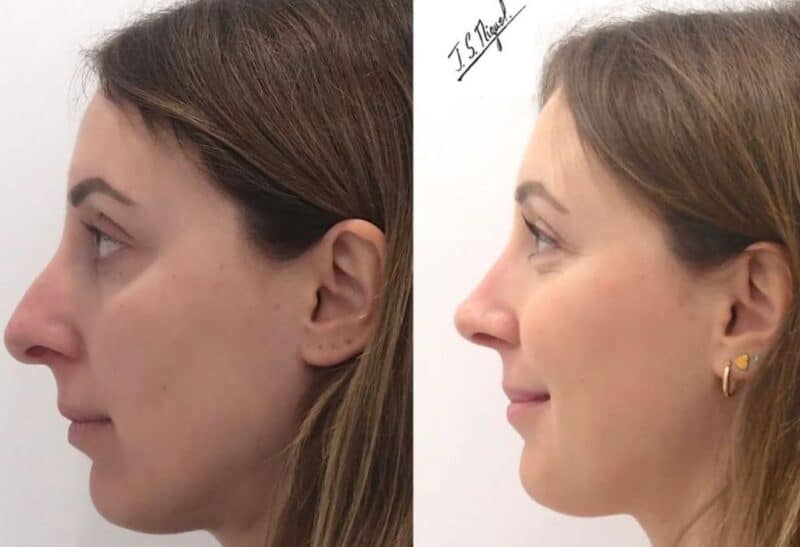
Patient who underwent a rhinoseptoplasty using ultrasound 2 months later
Does rhinoplasty change your face as you get older?
This is another of the questions that causes patients the most concern, and it warrants a nuanced answer.
In the short and medium term, the answer is yes: the nose changes, and with it, the harmony of the face. The nose occupies the geometric centre of the face, and any change in its volume, projection or angle directly affects how the other features are perceived: eyes, cheekbones, lips and chin. That is why a good rhinoplasty not only transforms the nose, but also rebalances the entire facial structure.
In the long term, the face continues to age naturally. Loss of volume in the cheeks, sagging facial tissue and changes in the skin affect the overall appearance. In this context, a surgically enhanced nose acts as an aesthetic anchor that ages more gracefully than its untreated counterparts, helping the face as a whole to retain its harmony for longer.
One critical factor that many patients do not take into account is the importance of preoperative planning. When the surgeon designs the new nose taking into account not only the appearance current appearance of the patient but also their future ageing, the results at twenty or thirty years are substantially better than when one acts exclusively with a view to the result in the immediate term.
How will I look after a 10 years of a nose job?
Once the first decade has passed, the results of a rhinoplasty performed using modern techniques are, in the vast majority of cases, completely stable and satisfactory. Any changes that may be observed over time are due to the normal physiological process of ageing, not to any failure of the surgery.
These are the most common changes that may occur in the long term:
- A slight dip in the bridge of the nose. This is the most common sign as we get older. The supporting tissues become slack due to the effects of gravity and the loss of skin elasticity, which can cause the tip to droop slightly. This happens to all noses, whether they have had surgery or not, but it is more pronounced and noticeable in noses that have not undergone previous surgery.
- Changes to the skin. The skin on the nose reacts to the passage of time in the same way as the rest of the face: it loses collagen, spider veins may appear, and its texture may change due to the accumulation of sun damage. None of these changes affect the surgical structure, but they do affect the overall appearance of the area.
- Resorption of cartilage. En casos minoritarios, los injertos o cartílagos modificados durante la cirugía pueden experimentar una ligera reabsorción a muy largo plazo. Este fenómeno es más probable cuando se utilizan técnicas no estructuradas. Las rinoplastias realizadas con injertos del propio paciente, como: técnica estructurada, rinoplastia de preservación del dorso o rinoplastia híbrida, ofrecen resultados mucho más estables a lo largo de los años.
- Conditions associated with smoking. El tabaco deteriora la microvascularización de los tejidos y compromete la calidad de la cicatrización a largo plazo. Los pacientes fumadores presentan mayor riesgo de que los injertos cartilaginosos sufran cambios negativos con el tiempo.
What studies consistently confirm is that a rhinoplasty that is well planned and performed by a specialist surgeon using modern techniques produces stable results that improve over time, not the other way round.
¿Cuáles son las consecuencias a largo plazo de la rinoplastia?
Beyond the cosmetic changes, rhinoplasty can have functional and structural consequences that are worth being aware of:
Long-term positive consequences
- Improved sustained breathing in cases of functional a9> functional rhinoplasty or septoplasty associated with benefits direct effects on the quality of sleep and athletic performance.
- Greater facial harmony that is maintained as the years go by the years thanks to the correction of proportions.
- A positive and lasting impact on self-esteem and confidence. Numerous studies have shown that favourable changes in physical appearance lead to improvements a15> physical appearance translate into sustained improvements in psychological well-being, social functioning and the perception of body image.
Consequences that may require attention
- In a small percentage of cases, approximately 10% according to the medical literature worldwide, may be necessary to undergo rhinoplasty as a revision to correct minor irregularities, resolve problems with scarring or adjust any aesthetic detail a31> which has not developed as expected.
- Subsequent changes in the appearance of the nose may occur due to factors such as resorption of cartilage, forces inherent to the cartilage, bone remodelling or atypical healing. The majority are treatable with minor procedures.
- With older techniques, which removed too much cartilage in an attempt to achieve very small or very refined noses, characteristic deformities such as the “pinch nose” or columellar retraction may develop in the long term. Modern techniques have virtually eliminated these risks.
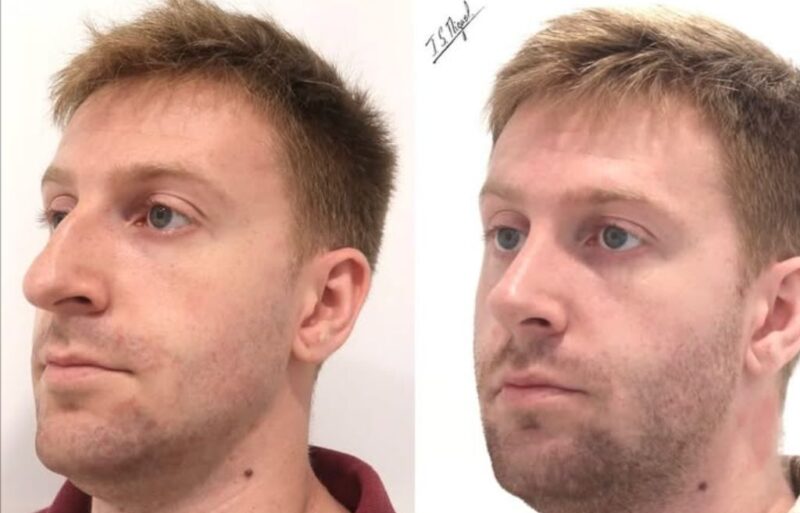
Patient who underwent a rhinoseptoplasty using ultrasound. 2 months later
Do patients regret having had nose surgery?
It’s a question I’m often asked during the first post-operative check-ups, especially at a time when social media tends to amplify both negative and positive cases out of all proportion. The data, however, tells a different story.
International statistics on satisfaction with rhinoplasty indicate that more than 90% of patients are satisfied with the overall outcome of the surgery. A 2015 study, based on 2,326 reviews of primary rhinoplasty published on RealSelf (Seattle, WA) , a social network for patients undergoing cosmetic surgery, showed an overall satisfaction rate of 83.6%, with a higher percentage of satisfied women (87.6%) compared to men (56.1%). The reviews were from 2,032 women and 294 men. Data from Dr Manuel Gea González Hospital, using the validated FACE-Q scale, found that satisfaction with the nose rose from an average of 36.66 points before surgery to 82.14 points three weeks post-operatively, with statistically highly significant improvements also observed in psychosocial functioning and quality of life.
Cases of genuine repentance (not related to the phase of post-operative adaptation) tend to be concentrated in three situations:
- Unrealistic expectations. Patients who expected to simply ‘copy and paste’ someone else’s nose, without realising that facial harmony is unique to each individual and cannot be replicated. Bone structure, skin thickness and the proportions of the rest of the face determine what can be achieved in each case.
- Inappropriate choice of surgeon. A rhinoplasty performed using outdated techniques or by a practitioner without the necessary specialisation can lead to unsightly results or functional problems that require correction. Choosing the right surgeon is by far the most important decision in the process.
- Psychological profile not assessed. Patients with body dysmorphic disorder or other conditions that affect the perception of their own image may not be satisfied with any result, regardless of the technical quality of the surgery. The preoperative psychological assessment is an essential tool in referral clinics. a30> referral
Outside of these scenarios, genuine regret following a properly indicated and well-performed rhinoplasty is, according to all available studies, extremely rare.
Modern techniques: why does today’s rhinoplasty age better
Not all rhinoplasties are the same, and not all age in the same way. Techniques developed over the last two decades have radically transformed long-term results:
- Structural rhinoplasty. It uses cartilage grafts taken from the patient’s own body to shape and support the new nose. As it relies on the patient’s own biological material, integration is optimal and long-term stability is far superior to that achieved with synthetic implants or pure resection techniques.
- Rhinoplasty for preservation of the bridge of the nose. Rather than shaving down the nasal hump and then reconstructing it, this technique works by preserving the original structure of the nasal bridge and redistributing the tissue. It produces more natural-looking results and ages much more naturally in harmony with the rest of the face.
- Rhinoplasty hybrid. It combines the advantages of open and closed techniques, adapting to the specific needs of each individual’s anatomy. It enables more precise procedures with less tissue trauma.
- Ultrasonic rhinoplasty. Using piezoelectric technology, this technique allows the nasal bone to be sculpted with millimetre precision, reducing surgical trauma and shortening recovery time. The results are more predictable and the healing process is cleaner.
The selection of the appropriate technique for each patient —depending on the nature of their nasal anatomy, the thickness of their skin, their aesthetic goals and their profile of future ageing — is one of the pillars that distinguishes a surgery from high quality surgery to a standard procedure.
At what age is it best to have surgery so that the results last longer?
Age has a significant impact on how the results will develop over time:
- Before the age of 18 years cosmetic rhinoplasty is not recommended because the nose has not yet fully developed because the nose has not yet completed its development. Operating on a structure that is still growing may alter the final result and compromise respiratory function.
- Between the ages of 18 and the age of 35 years is the period most common. The skin has greater elasticity, healing is faster and more efficient, and the results are more predictable. Operating in this area means that the nose is already fully healed a27> formed and that the tissues have sufficient capacity for adapt.
- From the age of 40 onwards, which can prolong the process of recovery and make so that the results are final take longer to settle. This does not preclude surgery, but it does does influence the planning technique and the expectations regarding recovery.
- In old age advanced, rhinoplasty may be particularly recommended to correct the drooping of the tip of the nose itself due to ageing, with a rejuvenating effect on the whole of the middle and lower thirds of the face.
Frequently asked questions about rhinoplasty and ageing
How long does it take to see the final results of a rhinoplasty?
Post-operative swelling subsides gradually. By 3 months, the result is already fairly stable; by 6 months, the near-final result is visible; and between 12 and 18 months, the nose is considered to have reached its final shape. In patients with thick skin or in cases of complex reconstruction, this process may take up to 24 months.
How many people need a second operation?
According to data from the international scientific literature, approximately 10% of patients require revision rhinoplasty. In most cases, this involves minor touch-ups carried out under local anaesthetic, rather than a new major operation.
What factors help the results last longer?
The main factors are: the surgeon’s experience and training, the technique used (structured and tissue-preserving techniques offer more lasting results), adherence to post-operative instructions, not smoking —as tobacco impairs healing and blood supply to the grafts— and consistent sun protection for the nasal area.
Can rhinoplasty affect the sense of smell?
In most cases, no. There may be a temporary reduction in the sense of smell immediately after the operation, due to swelling and nasal packing, but this resolves completely within the first few weeks. Permanent changes to the sense of smell are an extremely rare complication when the procedure is performed by a specialist surgeon.
Does a nose job change the shape of your eyes?
The nose and the eyes are features of the face closely related from the point of view of aesthetic harmony. Modifying the bridge, the tip or the width of the nose can change the perception of the eyes, making them appear more or less separated, more or less prominent. This effect is part of the overall result sought and should be planned consciously during the preoperative consultation.
Conclusion: a cosmetic treatment with results that last
In conclusion, rhinoplasty is a procedure which, when performed correctly, produces permanent results that age more gracefully than the original anatomy. Long-term satisfaction rates are consistently high across the scientific literature, and technical advances over the last two decades have significantly reduced the risk of complications and the need for revision surgery.
As with any complex surgical procedure, the key lies in three key factors: a well-established indication, thorough preoperative planning, and the selection of a team with the necessary training and experience to perform the most appropriate technique for each patient’s anatomy and specific objectives.
Si estás valorando una rinoplastia y tienes dudas sobre cómo evolucionarán los resultados con los años, en Pedralbes Clinic estamos a tu disposición para una valoración de tu caso personalizada sin compromiso. Llámanos al 622 665 559 para concertar tu visita conmigo
You can also read:
Rhinoplasty for Men: How to improve your nose without losing your masculinity
Post-operative care following rhinoplasty: How to ensure a smooth recovery
Rhinoplasty ultrasonic vs traditional. Key differences. Which is better

Ha intervenido con éxito a cientos de pacientes que han confiado en sus manos y conocimientos para solucionar todo tipo de problemas estéticos en su rostro.
El dr. San Miguel es uno de los mejores cirujanos de rinoplastia y blefaroplastia en Barcelona y sus pacientes destacan la naturalidad de los resultados que consigue.