WHAT IS RHINOSEPTOPLASTY?

Rhinoseptoplasty is a surgical procedure that combines two procedures in one:

  1. Rhinoplasty: Modifies the shape of the external nose for aesthetic reasons (reducing the size, changing the angle, narrowing the nostrils, etc.)
  2. Septoplasty: Corrects the nasal septum (the wall that separates the two nostrils) when it is deviated, which causes functional problems such as difficulty breathing.

By combining both procedures, both the aesthetic and functional aspects of the nose are addressed at the same time. It is common for people who have breathing difficulties due to a deviated septum to also wish to improve the appearance of their nose, so performing both operations at the same time is more efficient.

Benefits of rhinoseptoplasty:

  • A single surgical procedure and anaesthesia
  • A single recovery period
  • Lower total cost compared to doing them one by one
  • It improves both respiratory function and appearance

Recovery typically takes between 1–2 weeks for the visible swelling to subside, although complete healing may take several months. During that time a cast or splint is used a19> and there may be some bruising around the eyes .

More information Surgery on a deviated septum. Everything you need to know
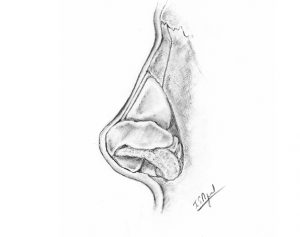
Ultrasonic rhinoseptoplasty and radiofrequency turbinoplasty

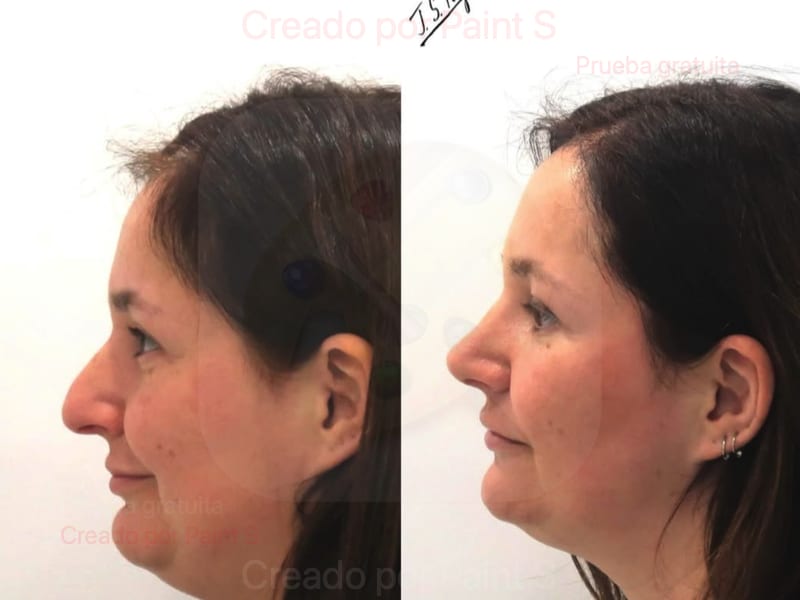
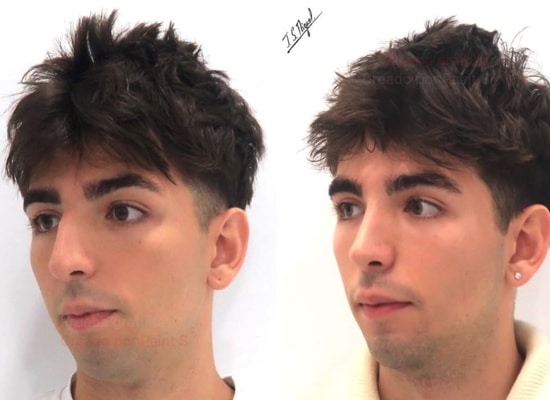
Rhinoseptoplasty: before and after

Rhinoseptoplasty ultrasonic and Turbinoplasty

Who is a rhinoseptoplasty recommended for?

The ideal candidates for a rhinoseptoplasty are:

People with problems relating to the function of the nose:

  • A deviated nasal septum that makes breathing difficult
  • Chronic nasal congestion
  • Snoring or apnoea during sleep associated with problems of the nose
  • Recurrent sinusitis due to poor drainage
  • Previous nasal trauma that affected the internal structure

People with aesthetic concerns:

  • Nose too large or small in proportion to the face
  • Hump or bump on the bridge of the nose
  • A drooping, bulbous or asymmetrical nose tip
  • A visibly crooked or deviated nose
  • Nasal sinuses very wide or asymmetrical
  • General dissatisfaction with the shape of the nose
surgeon rhinoplasty in Barcelona

Specialist in rhinoseptoplasty in Barcelona

Dr Joan San Miguel holds a degree in Medicine from the University of Barcelona and in Dentistry from the European University of Madrid.

He holds a PhD from the University of Navarra and is a specialist in facial and maxillofacial surgery, having trained at the prestigious Navarra University Hospital (CHN). A member of the Barcelona Medical Association (COMB) (no. 39345), he is also accredited to practise in Belgium, where he completed a European Fellowship in Cosmetic Facial Surgery at the University Hospital of Brussels (UZ Brussel) under the supervision of Dr Maurice Mommaerts, who is arguably one of the world’s leading facial plastic surgeons.

He is a member of the European Association of Facial Plastic Surgery (EAFPS), the European Association of Cranio-Maxillofacial Surgery (EACMFS) and the Spanish Society of Oral and Maxillofacial Surgery (SECOM), and sits on the board of the Catalan-Balearic Society of Maxillofacial Surgery (SCBCMF).

TE DAMOS LA MEJOR ATENCIÓN MÉDICO ESTÉTICA EN BARCELONA

Llama ahora y pide cita con el doctor para informarte.

Book now your septorhinoplasty in Barcelona

    Clínica de cirugía plástica en Barcelona

    Pedralbes Clinic es una de las mejores clínicas de cirugía maxilofacial en Barcelona. Dispone de unas instalaciones de vanguardia y un experimentado equipo médico estético.

    Tanto la intervención como el tratamiento pre y postoperatorio serán realizados en las propias instalaciones de la clínica situada en el Paseo de Manuel Girona, 14, en Barcelona.

    Otros tratamientos de cirugía estética:

    Rhinoplasty is a surgical procedure purely cosmetic a7> which modifies the shape of the external part of the nose (size, angle, tip, bridge) to improve its appearance. septoplasty is a functional surgery that corrects the nasal septum deviation to improve breathing.

    rhinoseptoplasty combines both procedures in a single operation, addressing simultaneously the aesthetic and functional problems of the nose. It is ideal for patients who have both respiratory difficulties a23> as well as wish to improve the appearance of their nose, allowing a single surgery, a single recovery and results that are harmonious in terms of both functionality and aesthetics.

    The surgery is performed under general anaesthetic, so you will not feel any pain during the procedure. In the post-operative period, discomfort is generally mild to moderate and can be easily managed with painkillers prescribed by the surgeon. Most patients describe a sensation of pressure or nasal congestion rather than severe pain. The discomfort usually subsides significantly after the first 3–4 days.

    Recovery involves several stages. The initial recovery lasts between 7 and 10 days, during which time you will wear a nasal splint and are advised to rest. You will be able to return to work or light activities after 10–14 days.

    Full recovery takes several months: the visible inflammation disappears within 2–3 weeks, but the swelling internal may take between 6 months and 1 year to resolve completely. During this period, the final results are gradually refined.

    You will usually be off work for 7–14 days, depending on the type of work you do. If you have an office-based or sedentary job, you should be able to return to work after around 7–10 days, although you will still be wearing the nasal splint and may still have some swelling.

    If your job requires physical effort, it is recommended to wait at least 2–3 weeks. You should avoid strenuous exercise for 4–6 weeks to prevent bleeding or complications.

    The results are visible immediately after the nasal splint is removed (7–10 days after surgery), although the nose will still be swollen. You will see a significant improvement in appearance after 3–4 weeks, once the most noticeable swelling has subsided. However, the final results are not apparent until 12–18 months have passed, which is the time the nose needs for the internal swelling to disappear completely and for the tissues to settle into their final position. The tip of the nose is the last area to reveal its final shape.

    At Pedralbes Clinic, we use modern techniques that minimise or avoid the use of traditional nasal packing, which used to be very uncomfortable. In some cases, soft silicone strips or internal splints are inserted, which are much more comfortable and allow the patient to breathe partially through the nose.

    These are removed usually between 5–7 days after the surgery. The surgeon will inform you specifically about what to expect in your case during the pre-operative consultation.

    In the majority of cases, the scars are not visible. The closed technique (endonasal) leaves no external a9> because all the incisions are made inside the nose. In the open technique, a small incision is made in the columella (the tissue between the nostrils). a26> in the columella (the tissue between the nostrils), which usually heals very well and becomes practically imperceptible over time.

    Yes, that is precisely one of the main objectives of rhinoseptoplasty. By correcting the deviated septum and, if necessary, reducing the turbinates in the nose that are hypertrophied, there is a significant improvement in a23> the flow of air through the nasal passages.

    The majority of patients experience a noticeable improvement in breathing once the post-operative swelling subsides (approximately 2–4 weeks later). Many report being able to breathe better than ever, which in turn also improves the quality of sleep and reduces the snoring.

    It is recommended to wait until facial growth is complete, which is generally around 16–18 years for women and 18–20 years for men. However, each case is unique, and the surgeon will assess the patient’s physical and emotional maturity.

    In cases of severe respiratory problems or trauma, it may be considered appropriate to perform it at younger ages. There is no upper age limit that always a18> provided that the state of general health of the patient is good.