RHINOPLASTY OF THE TIP OF THE NOSE
The tip of the nose is the part of the nose that gives it the most definition and character, for this reason it is necessary to carry out a meticulous treatment of this area, in order to achieve results that are both functional (correct breathing) and aesthetic (harmonious dimensions and shapes) when a rhinoplasty is performed.
In most cases when a nose is classified as “operated” or “fake is due to the fact that the tip has been altered in a somewhat harmonious manner. A large proportion of the noses regarded as attractive lack of sharp angles, narrowness and excessive projection.
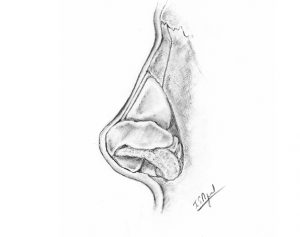
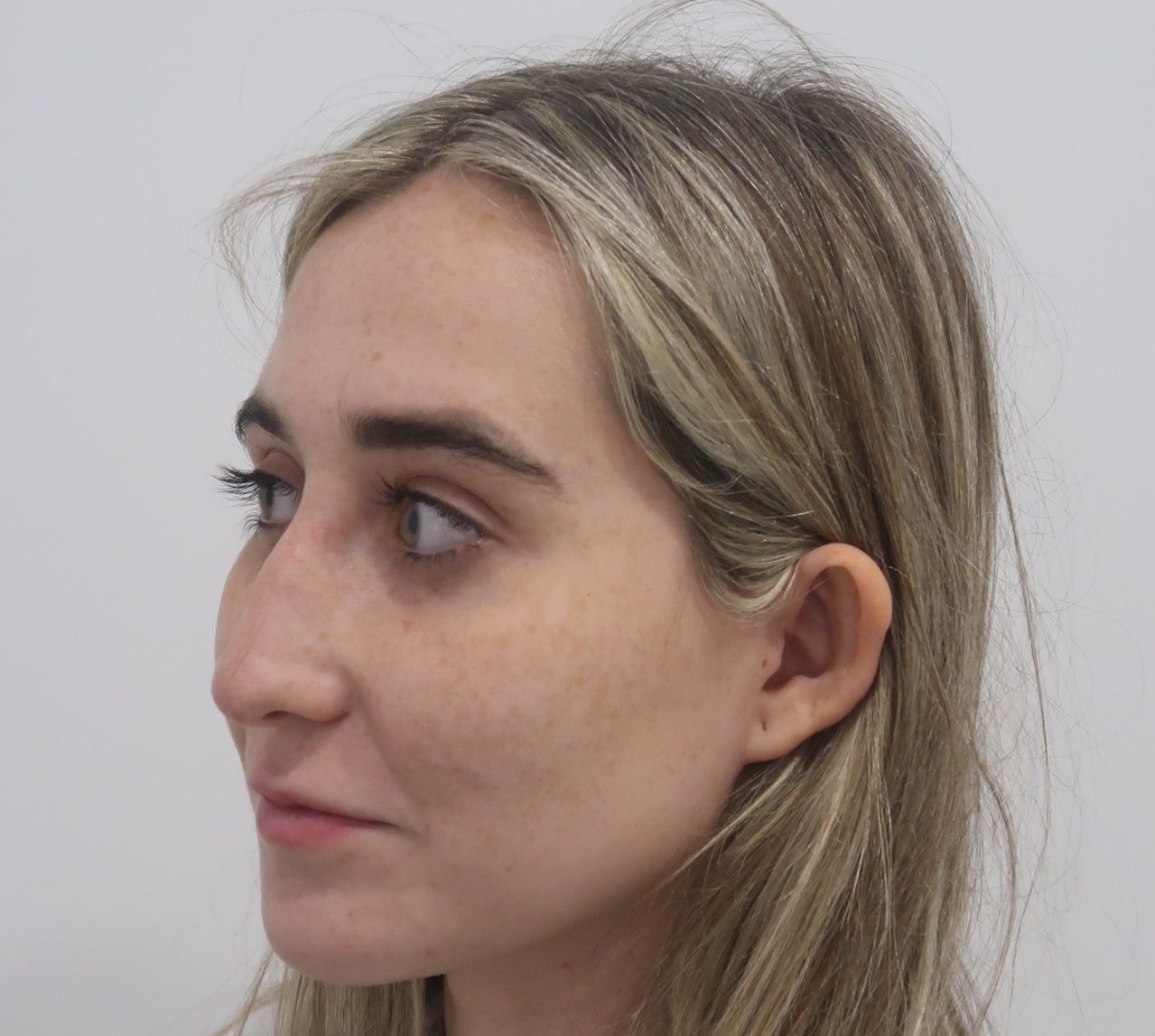
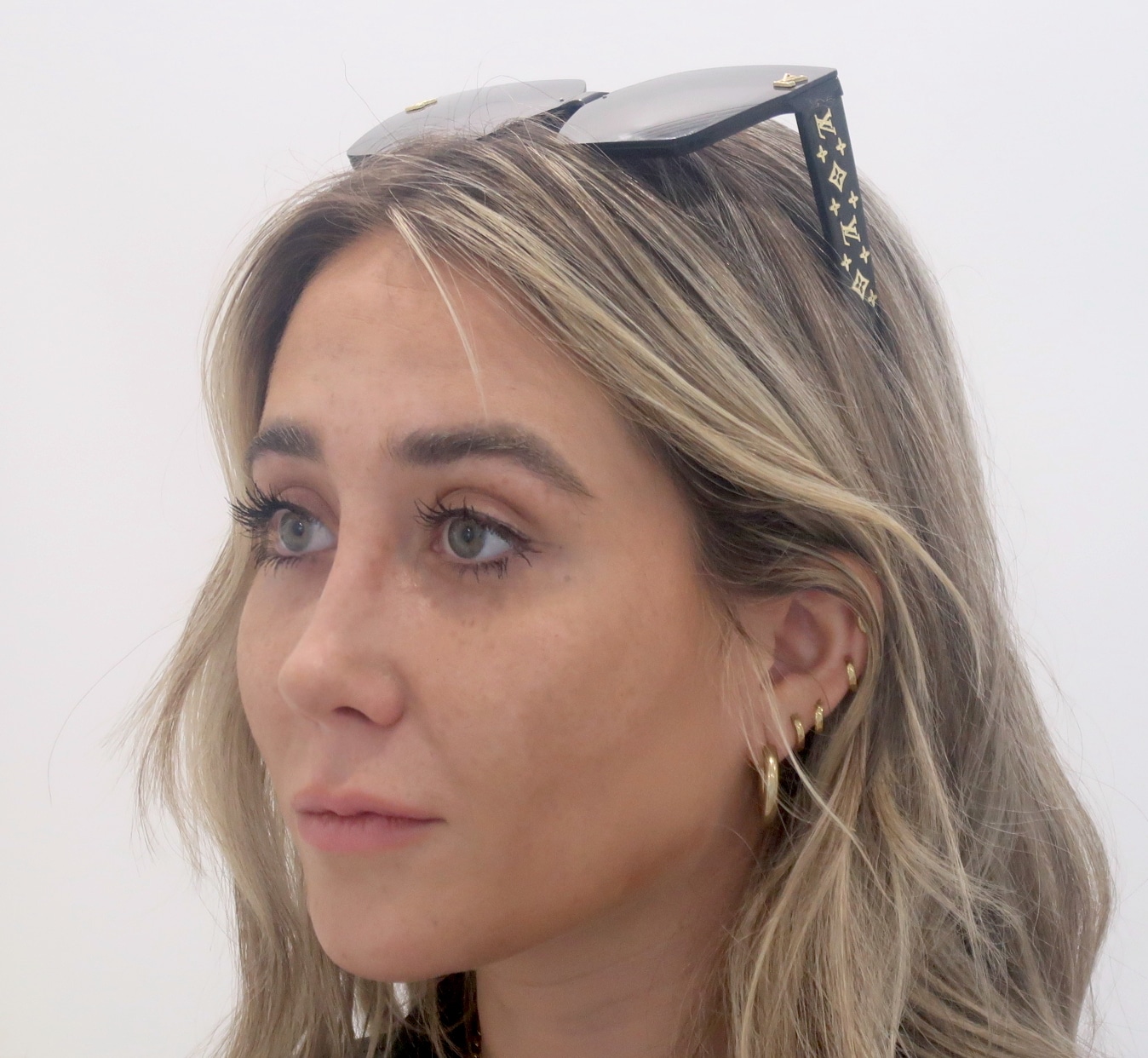
The nasal tip can be addressed using either open or closed rhinoplasty. To ensure a clear view when using the closed rhinoplasty technique, we employ an innovative approach that allows us to visualise the entire alar cartilage with virtually no distortion. This innovative approach spares the patient a visible scar on the columella, which would otherwise be necessary in the case of open rhinoplasty.
The shape of the tip of the nose is determined by the alar cartilages (one on the right and one on the left), the overlying fibrous tissue (known as the SMAS), and the skin and connective tissue covering it.
- In people with thin skin, a change in the alar cartilage will cause a very noticeable change in the shape of the tip. If the cartilage narrows, the skin will follow suit.
- In patients with thick skin, this is more difficult to achieve. Despite narrowing the cartilaginous framework and reshaping it, the skin often does not follow the new contour completely. It is therefore necessary to also employ the SMAS debulking technique, which reduces at least some of the fibrous tissue covering the alar cartilages.

Correction of various types of nasal tip
A lack of definition at the tip is usually resolved by using a series of sutures at the dome of the tip. Among the most important types of suture are: the intradomal suture, to define the dome of the alar cartilages; the interdomal suture, to align the two alar cartilages and ensure symmetry; the ‘spanning suture’, to narrow the tip even further (specifically, the uppermost part of the tip or ‘supratip’), in very specific cases where the patient requests it; and the subdomal suture, to create proper harmony in the columella area.
Although the use of septal cartilage grafts was very common during the 1990s, they are now increasingly reserved for specific cases only, as over time they can give the nose a ‘surgical’ appearance. Examples include the shield graft and the cap graft, amongst others.
Rhinoplasty in which only the tip of the nose is surgically altered is generally an exceptional case, although it can occur. If this is the case, a procedure may be performed using only local anaesthesia, with or without mild oral sedation.
The post -post-operative period will be more tolerable and there will be no presence of bruising at the infraorbital level. In the remaining cases, it is normal for the tip to be operated on together the back, requiring deep sedation or general anaesthesia depending on the case.

Book now your rhinoplasty for the tip of your nose in Barcelona
Other treatments
for rhinoplasty
Clínica de cirugía plástica en Barcelona
Pedralbes Clinic es una de las mejores clínicas de cirugía maxilofacial en Barcelona. Dispone de unas instalaciones de vanguardia y un experimentado equipo médico estético.
Tanto la intervención como el tratamiento pre y postoperatorio serán realizados en las propias instalaciones de la clínica situada en el Paseo de Manuel Girona, 14, en Barcelona.
Otros tratamientos de cirugía estética: