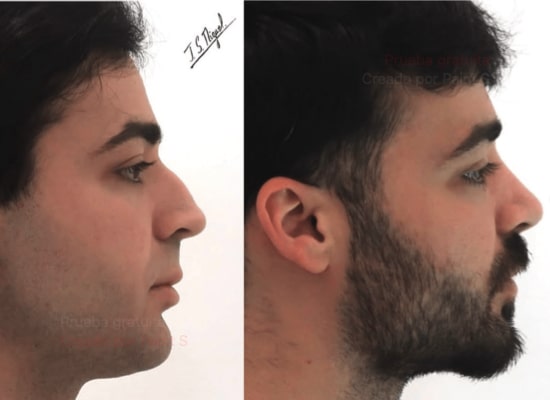
Having surgery on the nose is a decision that many people make every year with positive results. But when something goes wrong, the consequences can be physical, functional and psychological, and in some cases, difficult or impossible to reverse. With this article I am not seeking to instil fear regarding
Is rhinoplasty dangerous?
The short answer is: no, but nor is it a minor operation. Rhinoplasty is not a procedure that is dangerous if all the necessary protocols are followed a17> to carry it out and if it is performed by experienced specialists. Just like all other surgeries, it carries risks, but its complications are not common when it is in the right hands.
The key lies in that phrase: ‘the right hands’. Because the likelihood of a medical error increases significantly if the chosen practitioner is inexperienced or if you opt for a low-cost clinic. And in nose surgery, a mistake is no minor inconvenience: it results in a deformity at the centre of the face, or breathing difficulties that may affect you for the rest of your life.
General risks associated with any rhinoplasty
Before examining what specifically happens with inexperienced surgeons, it is important to understand the risks inherent in the procedure, regardless of who performs it.
The surgical risks of rhinoplasty include the formation of a blood clot, poor positioning of the corrected cartilage and bones, an undesirable shape of the nose at the end of the operation, permanent breathing difficulties, infections, heavy bleeding, discolouration and permanent numbness in the nose, changes in the sense of smell, and complications related to the anaesthetic.
In addition to these, there are more specific risks described by the American Society of Plastic Surgeons: during rhinoplasty, changes may occur in the nasal airways that interfere with the normal flow of air; a perforation may even form in the nasal septum, and in some cases it may be impossible to correct this complication through further surgery.
And although less common, there are risks associated with the habits of the patient which the surgeon must assess: the use of cocaine increases the risk of necrosis of the nasal tissues and of cardiac and vascular accidents during the procedure. In regular users of cannabis, the risk of problems cardiac and pulmonary during the operation may lead to causing a cardiac arrest during anaesthesia.
What happens specifically when the surgeon does not have experience
This is where the situation goes from “manageable risk” to “serious problem”. Rhinoplasty is one of the procedures with the steepest learning curve in a15> learning curve within the field of plastic surgery. It is not enough to know the anatomy of the nose: it is required to have technical mastery, aesthetic judgement, the ability to manage unforeseen circumstances and the accumulated experience in a33> unforeseen events and experience gained in cases of varying complexity.
It is important to distinguish between unforeseeable complications, for which an experienced surgeon must be prepared, and medical negligence, which can jeopardise the patient’s health and physical appearance. Furthermore, secondary rhinoplasty cannot always correct a procedure that has been performed incorrectly.
Errors commonly attributed to inexperience
Some of the most common complications following a poorly performed rhinoplasty include: a crooked nose, irregularities in the bridge, an excessively wide tip, and irregularities in the nostrils.
Another common technical error with long-term consequences: if the surgeon alters the bone or cartilage of the nasal septum incorrectly, the tissue may recede over time, leading to a progressive deformity that was not visible immediately after the operation.
From a functional perspective, if the surgery is not performed correctly, it can adversely affect the patient’s breathing capacity. Working with an experienced surgeon is essential to maintain proper respiratory function whilst improving the aesthetic outcome.
In the most serious cases, nasal surgery performed by an inexperienced practitioner can lead to functional complications such as breathing difficulties, a deviated septum caused by incorrect removal, chronic discomfort affecting the turbinates or nasal valves, or a poorly performed septoplasty.
It depends on the patient
The responsibility for minimising the risks does not rest solely with the surgeon. The patient has an active and inescapable role:
- Do not withhold medical information. Tell your surgeon about your full medical and surgical history, any allergies, medication, tobacco or drug use, vitamin supplements and dietary habits. Undergoing surgery without a pre-operative assessment or prior preparation carries a high risk of complications.
- Stop smoking. Tobacco impairs healing and increases the risk of vascular complications. It is recommended is not to smoke for at least two months before the procedure and one month afterwards.
- Do not take anticoagulants without telling us. Medicines such as aspirin or ibuprofen increase the risk of bleeding. They should be stopped in accordance with the instructions given by the surgeon.
- Follow the post-operative instructions carefully. It is very important to follow the instructions given by the surgeon regarding the post-operative period in order to avoid risks and undesirable outcomes.
The real cost of making the wrong choice: secondary rhinoplasty
When the initial procedure fails, the solution is a revision rhinoplasty. And this is where the problem becomes more serious: secondary rhinoplasty is more demanding than the first, as the surgeon is working on a sensitive nose and with a patient who is still haunted by the fear of a previous failure. The surgeon must strike a balance between the patient’s expectations and what is actually achievable following an unsatisfactory result.
In financial terms, as we pointed out in our article on prices, a secondary rhinoplasty can cost up to as much as 40% more than the primary procedure, and in cases that are complex, exceed the 10,000 euros. Cheapness, in this context, can turn out to be extraordinarily expensive.
See Secondary rhinoplasty: everything you need to know about this second chance
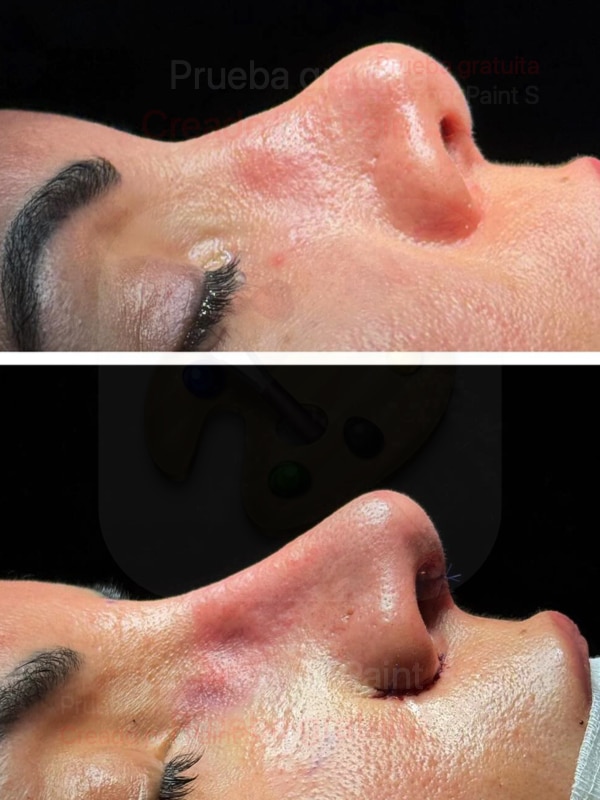
Before and after secondary rhinoplasty in the operating theatre
When a complication becomes medical negligence
Not every complication is negligence. Complications are part of the risk inherent in any surgery, and even the best surgeons also face them. The difference lies in the cause and in how they are managed.
The following constitute evidence of medical negligence in rhinoplasty: the use of techniques that do not meet conventional medical standards; the failure to carry out adequate pre-operative tests to identify anatomical conditions or allergies; the inappropriate use of anaesthesia—which can lead to anything from paralysis to death in the most serious cases; and the failure to provide the recommended post-operative care.
If you suspect that you have been the victim of medical negligence, it is important to take action: patients can bring a civil claim for medical liability and initiate criminal proceedings for liability arising from negligence or wilful misconduct on the part of healthcare staff.
Warning signs to look out for before you have surgery
Identifying a surgeon without the proper training can be difficult for someone outside the medical sector. These are the indicators that are most reliable and should trigger youralert:
Price far too low. A quote that is well below the market average is not a bargain: it is a sign that something is amiss, whether it be the surgeon’s training, the facilities, the materials used or the post-operative care included.
No photographs of previous cases. Any surgeon with genuine experience in rhinoplasty will have a documented portfolio. If they cannot show you their own verifiable results, you have no objective evidence of their technical ability.
A superficial or excessively brief pre-operative consultation. To minimise risks, the surgeon must assess thoroughly the medical history, medical history and medical conditions of the patient, as well as carrying out a comprehensive a16> comprehensive physical examination of the nose which includes functionality, symmetry, proportion, size and shape. A consultation that lasts fifteen minutes and ends with a quote in your hand is a sign of alarm.
He is not a specialist in nasal surgery. Rhinoplasty is not a procedure that should be performed by any surgeon cosmetic generalist. The experience of the surgeon and of the entire surgical team can reduce the risk. a16> surgical team can reduce the risk of many complications. Ask directly how many rhinoplasties they perform per year and whether is certified by a medical society recognised (in Spain, the SECPRE).
Promises of guaranteed results. No reputable surgeon guarantees specific results. Nasal anatomy, skin thickness, individual healing patterns and other factors make it impossible to be absolutely certain. Anyone who guarantees results without any caveats is not being honest with you.
Frequently asked questions about the risks of rhinoplasty
¿Cuáles son los efectos secundarios más habituales tras una rinoplastia?
The most common symptoms are also the least serious: swelling and bruising in the area around the eyes during the first few days, temporary nasal congestion due to post-surgical oedema, and a sensation of numbness in the tip of the nose which resolves progressively over weeks or months. None of these effects indicates a complication; are part of the natural recovery process and resolve without further intervention in the vast majority of the cases.
Is bleeding common after the operation?
A small amount of bleeding in the first few hours is normal and to be expected. What should raise concerns is excessive or prolonged bleeding over time. The preoperative protocol includes the discontinuation of anticoagulants such as aspirin and ibuprofen days before the procedure, precisely to minimise this risk. If after the surgery you notice any bleeding that does not stop, contact the medical team immediately.
Will I have trouble breathing after a nose job?
Nasal congestion during the first few weeks is common and is caused by post-operative swelling, not by a structural problem. What can happen, however—and this is one of the most serious consequences of a poorly performed rhinoplasty—is a permanent functional impairment that makes breathing difficult. For this reason, nasal functional assessment forms part of the surgical planning protocol: we do not focus exclusively on aesthetics without assessing the impact on the airway.
What specific risks are associated with nose surgery compared to other facial surgeries?
Rhinoplasty has a distinctive feature that sets it apart from other facial cosmetic procedures: it involves a structure that performs a vital function—breathing—and is at the centre of the face. [3] This means that any error has a dual impact: aesthetic and functional. It is also one of the procedures with the steepest learning curve, which reinforces the importance of being treated by a specialist in nose surgery rather than a general cosmetic surgeon.
Are there risks that are rare but serious that I should be aware of?
Yes, and being transparent about them is part of responsible medical practice. Among the less common but more serious risks are: skin necrosis, burns from the electrosurgical unit, perforation of the nasal septum, and severe adverse reactions to the anaesthetic. The incidence of these is very low in clinics with strict protocols and specialist surgeons. In any case, before the procedure, the surgeon will normally explain in detail all the risks applicable to your case and you will sign a full informed consent form.
Have you had a botched rhinoplasty?
In many cases, yes, through secondary rhinoplasty. However, not all the results of poorly performed surgery can be corrected. There are situations—such as a perforated septum, excessive cartilage removal or damage to the nasal valves—where the scope for correction is limited, even in the hands of experts.
How do I know if the surgeon is qualified?
To avoid complications, consult a surgeon who specialises in the nose, with operating theatre experience and specific training. Such a professional can not only improve the appearance of your nose, but also treat any underlying issues you may have. Check their professional registration, their recognised specialism, and their membership of scientific societies such as SECPRE.
Rhinoplasty is a surgical procedure with a high safety profile when it is performed correctly. The real problem is not that a9> performed correctly. The real problem does not lie in the procedure itself, but in the conditions under which it is carried out. Choosing a surgeon based on price, based on immediate availability or without checking their specific experience in nose is the greatest risk factor that exists in this procedure. Before you decide, do your research, compare, insist on a real portfolio and make sure that the pre-operative consultation is thorough. Your nose is permanent; the decision about who operates on it, too.
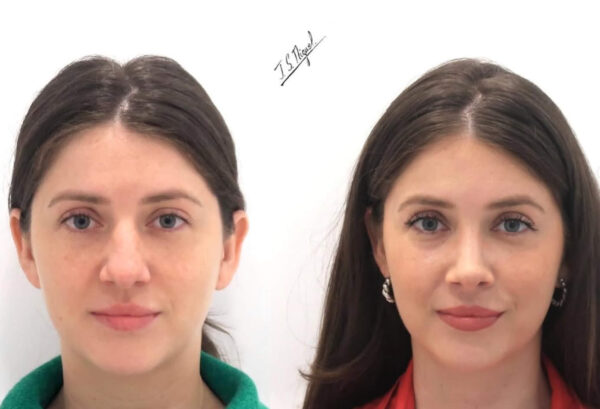
Rhinoseptoplasty using ultrasound and preservation of ligaments.
Take the first step towards achieving a nose that is more attractive and functional with complete confidence
Rhinoplasty has a high safety record when it is performed by experienced surgeons, in facilities that are suitable and with a rigorous follow-up. The greatest source of risk does not lie in the surgery: it lies in not choosing carefully who operates on you.
If you are considering having nose surgery in Barcelona and want to clear up any doubts with a specialist before making any decision, at Pedralbes Clinic, we perform hundreds of rhinoplasties and other facial surgeries with the utmost satisfaction of our patients, both for the results achieved as well as for the care received from the entire a38> the entire team before, during the procedure and throughout the entire post-operative period. See reviews from patients. Call us on 622 665 559 or write to us via the contact form to arrange an initial visit, during which we will assess your case in a professional and honest manner to explain to you everything that a well-executed rhinoplasty can offer you. We are located at Paseo de Manuel Girona, 14, Barcelona — next to the Maria Cristina metro station (L3).
You can also read:
Rhinoplasty and ageing: What happens to a nose that has undergone surgery as time goes by
Rhinoplasty: the 10 most common reasons for having nose surgery
Post-operative care following rhinoplasty: How to ensure a smooth recovery
Rhinoplasty ultrasonic vs traditional. Key differences. Which is better

Ha intervenido con éxito a cientos de pacientes que han confiado en sus manos y conocimientos para solucionar todo tipo de problemas estéticos en su rostro.
El dr. San Miguel es uno de los mejores cirujanos de rinoplastia y blefaroplastia en Barcelona y sus pacientes destacan la naturalidad de los resultados que consigue.